
Does Stainless Steel Leach Chemicals or Nickel Into Food?
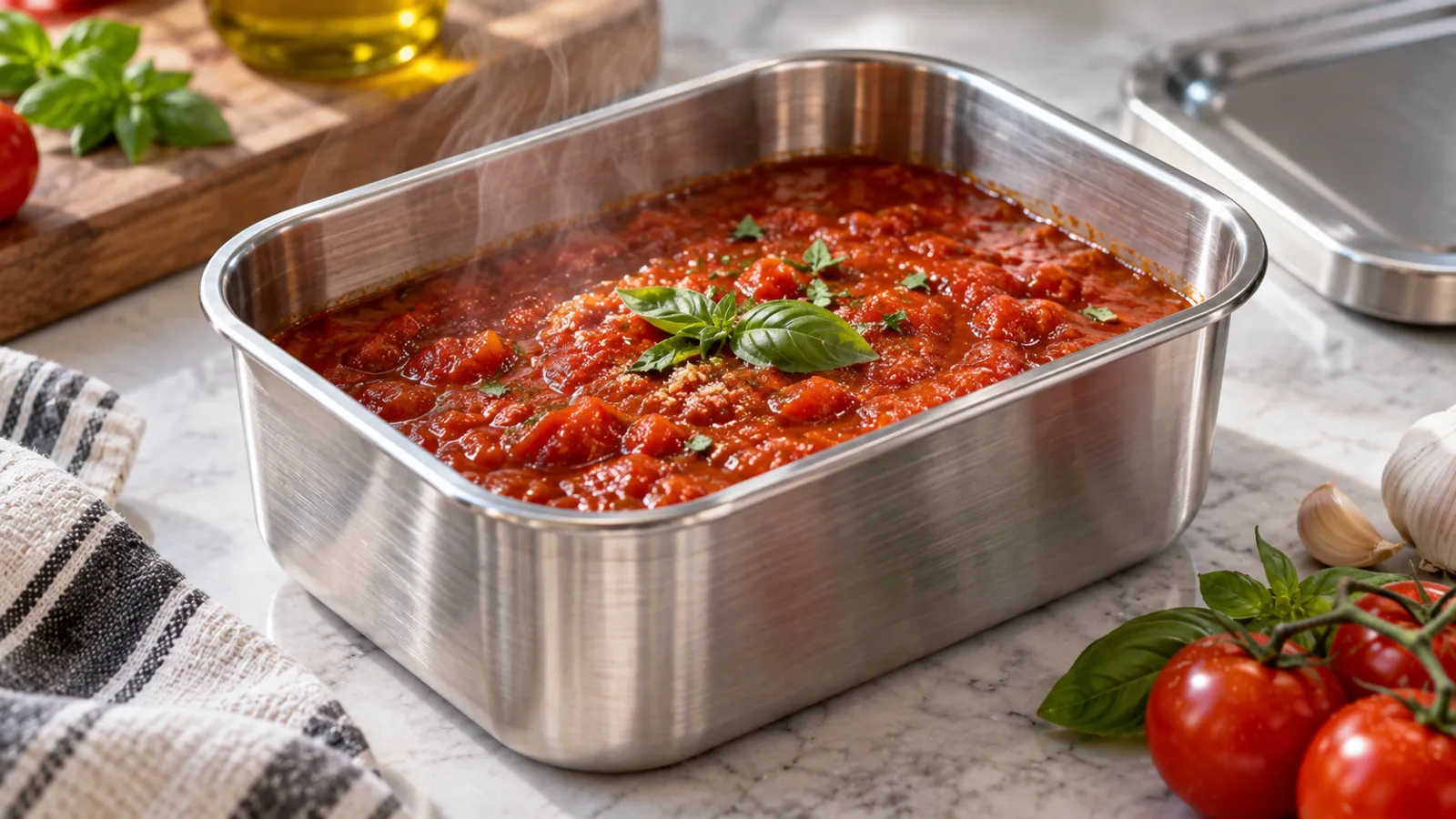
When it comes to does the steel leach into food, the right choice depends on a few key details. You switched to steel to avoid chemicals, then read that steel can leach metal into food. So which is it? The honest answer is that steel can release tiny amounts under certain conditions, and for most people that is not a concern.
Does Stainless Steel Leach Into Food: Stainless steel can release very small amounts of nickel and chromium into food, mostly when acidic or salty foods sit in it for a long time, or when the surface is scratched or brand new. For most people these trace amounts are well within safe limits and not a health concern. People with a nickel allergy are the main group who should limit long storage of acidic foods in steel.
Below is what leaching is, when it happens, how much, and who should care.
What leaching actually is
Leaching means a small amount of a material passes from a container into the food it holds.
With this material, that would be traces of the metals in the alloy, mainly nickel and chromium. Steel resists this because its chromium forms a stable surface layer that keeps the metal from reacting. In normal use, the layer holds and almost nothing transfers.
When it happens: acid, salt, time, and damage
Four conditions raise the chance of a little leaching.
Acidic foods, like tomato, citrus, or vinegar, are mildly corrosive and can slowly wear the surface layer over long storage. Salty foods can do the same. Time matters, since a food stored for days transfers more than one stored for an hour. Damage matters too, since a scratched surface has a broken protective layer.
How much, and is it safe?
The amounts are small, and for most people they are safe.
Studies of the metal and food find that the metal transferred under normal storage is low, usually far below the levels that would cause harm. The body handles small amounts of chromium and nickel from many sources, including food itself.

Who should care: nickel sensitivity
One group has a real reason to pay attention: people with a nickel allergy.
Nickel allergy is one of the more common contact allergies, and a small amount of nickel from long stored acidic foods could matter for a sensitive person. If you have a known nickel allergy, avoid storing very acidic foods in steel for days, or choose a higher grade like 316 that resists leaching more.
How to reduce leaching
A few habits keep leaching to almost nothing.
Do not store very acidic or salty foods in steel for days at a time. Move leftovers like tomato sauce to glass for long storage if you prefer. Avoid steel wool and harsh scrubbers that scratch the surface. Wash a new container before first use.
Comparison table
| Condition | Leaching risk | What to do |
|---|---|---|
| Neutral food | Very low | Store freely |
| Acidic food, long term | Higher | Use glass for long storage |
| Salty food | Moderate | Rinse residue, avoid long storage |
| Scratched surface | Higher | Avoid harsh scrubbers |
| Brand-new container | Slightly higher at first | Wash before first use |
For authoritative background, see this reference on the steel.
That covers the essentials of does this material leach into food. Browse the related guides below for more, or explore the Canis Lycaon collection.
More on Does Stainless Steel Leach Into Food
- Plastic Free Food Storage Steel Containers
- Best Plastic Free Food Storage
- Can You Microwave Freeze Stainless Steel Containers
- Stainless Steel Snack Containers with Silicone Lids
Frequently asked questions
Does the metal leach into food?
It can release very small amounts of nickel and chromium, mostly when acidic or salty foods sit in it for a long time, or when the surface is scratched or new. For most people these trace amounts are well within safe limits.
Is nickel leaching from steel dangerous?
For most people, no. The amounts transferred under normal storage are small and within safe limits, and the body handles trace nickel from many sources. The exception is people with a nickel allergy.
Can you store acidic food in stainless steel?
Yes, for short periods like a day or two. Over many days, acidic foods can slowly wear the surface layer and transfer trace metal. For long storage of very acidic foods, glass is a good alternative.
Is new stainless steel safe?
Yes. New stainless steel can release slightly more metal at first, which is why washing it before first use is a good idea. After that, the surface layer stabilizes and leaching drops to negligible.
Who should avoid steel for acidic foods?
People with a nickel allergy have the most reason to limit long storage of very acidic foods in steel. They can store acidic foods in glass instead, or choose grade 316, which resists leaching more.