
Do Stainless Steel Containers Rust? Causes and How to Prevent It

When it comes to do stainless steel containers rust, the right choice depends on a few key details. You bought steel partly because it does not rust like cheap metal. Then you spot a small orange mark and wonder if you were wrong. The truth sits in the middle: steel resists rust well, but it is not fully rustproof.
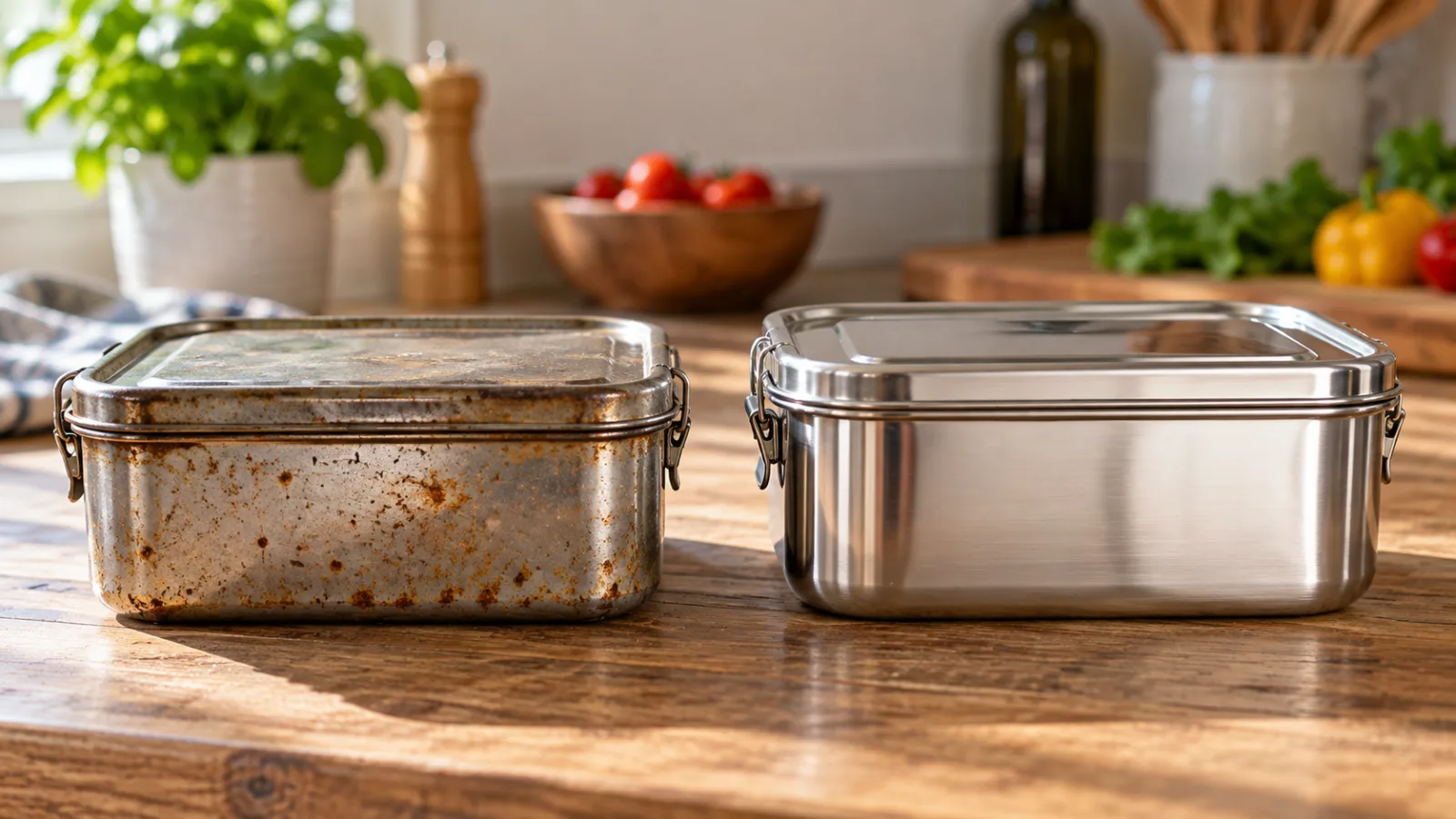
Do Stainless Steel Containers Rust: Stainless steel resists rust but is not fully rustproof. It can develop small rust spots or pitting when salt, acidic residue, or harsh dishwasher chemicals break down its protective chromium layer, especially if food sits or the surface is scratched. You can remove light rust with baking soda or vinegar, then dry the container fully. Rinsing off salt and drying after washing prevents almost all rust.
Below is why steel usually does not rust, what breaks that protection, and how to fix and prevent spots.
Why stainless steel usually does not rust
The chromium in stainless steel reacts with air to form a thin, stable layer on the surface, called the passive layer. This layer blocks oxygen and moisture from reaching the iron underneath, which is what would rust. As long as the layer stays intact, the steel stays bright. This is why a quality container can go years without a spot.
What breaks that layer: salt, acid, and harsh cleaners
Salt is the main culprit. Salty residue left on the surface can slowly break the layer and let rust start. Acidic foods can do the same over long contact. Harsh detergents and very hot, long dishwasher cycles can strip the layer too. And a deep scratch removes the layer directly, exposing bare metal. Rust on steel is almost always a sign that the layer was worn, not that the steel was faulty.
How to remove rust spots safely
Make a paste of baking soda and water, spread it on the spot, wait a few minutes, then rub gently with a soft cloth. For tougher spots, a little white vinegar works, followed by a rinse. Avoid steel wool and harsh abrasives, which scratch the surface and make future rust more likely. After cleaning, rinse and dry the container fully.
How to prevent rust for good
Rinse off salty or acidic residue after each use, so it does not sit on the surface. Dry the container after washing instead of leaving it wet, since standing water invites spots. Use gentle detergents and avoid the harshest dishwasher cycles. Do not scrub with steel wool. And store containers dry, not damp in a closed cupboard.
Does the dishwasher cause it?
Very hot, long cycles and harsh detergents can wear the passive layer over time, and containers that knock together can scratch. Salty food residue rinsed onto other items can also spread. To keep steel bright in the dishwasher, use a gentler cycle and detergent, place containers so they do not scratch each other, and dry them if they come out damp.
Comparison table
| Cause | Why it rusts | How to prevent |
|---|---|---|
| Salt residue | Breaks the passive layer | Rinse after use |
| Acidic food | Wears the layer over time | Do not store acid long term |
| Harsh detergent | Strips the layer | Use gentle detergent |
| Scratches | Expose bare metal | Avoid steel wool |
| Sitting water | Invites spots | Dry after washing |
For authoritative background, see this reference on stainless steel.
That covers the essentials of do stainless steel containers rust. Browse the related guides below for more, or explore the Canis Lycaon collection.
More on Do Stainless Steel Containers Rust
- Plastic Free Food Storage Steel Containers
- Can You Microwave Freeze Stainless Steel Containers
- Best Plastic Free Food Storage
- Stainless Steel Snack Containers with Silicone Lids
Frequently asked questions
Do stainless steel containers rust?
Stainless steel resists rust but is not fully rustproof. It can develop small rust spots when salt, acidic residue, or harsh cleaners break down its protective chromium layer, especially on a scratched surface. Rinsing off residue and drying after washing prevents almost all rust.
Why does my stainless steel rust?
Usually because something wore through the protective layer. Salt residue, acidic food, harsh detergent, or a deep scratch can all do it. Rust on steel is a sign the passive layer was damaged, not that the steel was faulty.
How do you remove rust from steel?
Make a paste of baking soda and water, apply it to the spot, wait a few minutes, then rub gently with a soft cloth. White vinegar works for tougher spots, followed by a rinse. Avoid steel wool, which scratches. Dry the container fully afterward.
Does the dishwasher cause rust?
It can contribute. Very hot cycles, harsh detergents, and containers knocking together can wear or scratch the protective layer. To avoid it, use a gentler cycle and detergent, place containers so they do not scratch, and dry any that come out damp.
How do you prevent rust on steel containers?
Rinse off salty and acidic residue after use, dry the container after washing, use gentle detergents, and avoid steel wool. Store containers dry, not damp. These simple habits keep the protective chromium layer intact.