
How to Manage Hair Tool Cords and Cables
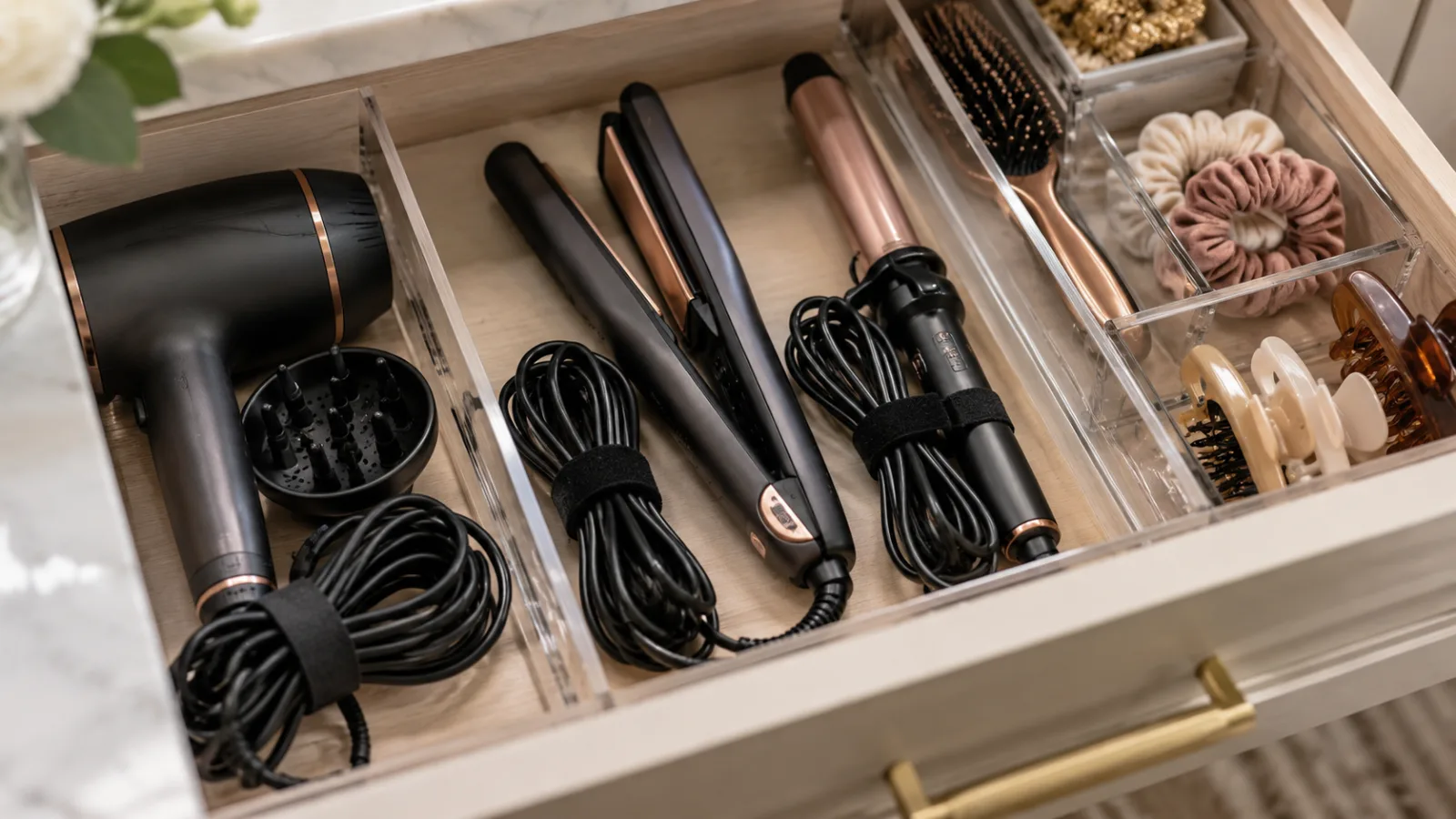
When it comes to hair tool cord management, the right choice depends on a few key details. Cords are the quiet cause of most hair tool messes. They tangle in a drawer, dangle off the counter, and pool near the sink. A few simple habits keep them under control and make your tools last longer.
Hair Tool Cord Management: To manage hair tool cords, give each tool its own hook or slot, secure the cord with a reusable hook and loop tie, and wrap it loosely in a wide loop so the wire does not kink. Never coil a cord while the tool is hot, because heat can weaken the wire. Keep cords and outlets away from the sink, and pick storage with built in hooks so cords do not pool on the counter.
Below is why cords tangle, the right way to wrap one, and how to keep cords safe near water.
Why cords tangle and fray
Loose in a drawer, they wrap around each other and around the tools. On a counter, they slide and dangle. Over time, tight coiling and sharp bends fray the wire inside, which shortens a tool’s life. The two problems, tangling and fraying, both come from cords with no home and bad wrapping habits.
The right way to wrap a cord
Wrap the cord in a loose, wide loop, following its natural curve, then secure it with a reusable hook and loop tie. Do not wrap it tight around the tool, which kinks the wire and stresses the point where the cord meets the handle. A loose, wide loop keeps the wire healthy.
Ties, hooks, and slots that keep cords apart
Reusable hook and loop ties keep each cord bundled and with its tool. Hooks, built into an organizer or added to a wall, hang cords off the surface. Slots in an organizer keep tools upright so their cords stay separated. Choose an organizer with built in hooks or slots.
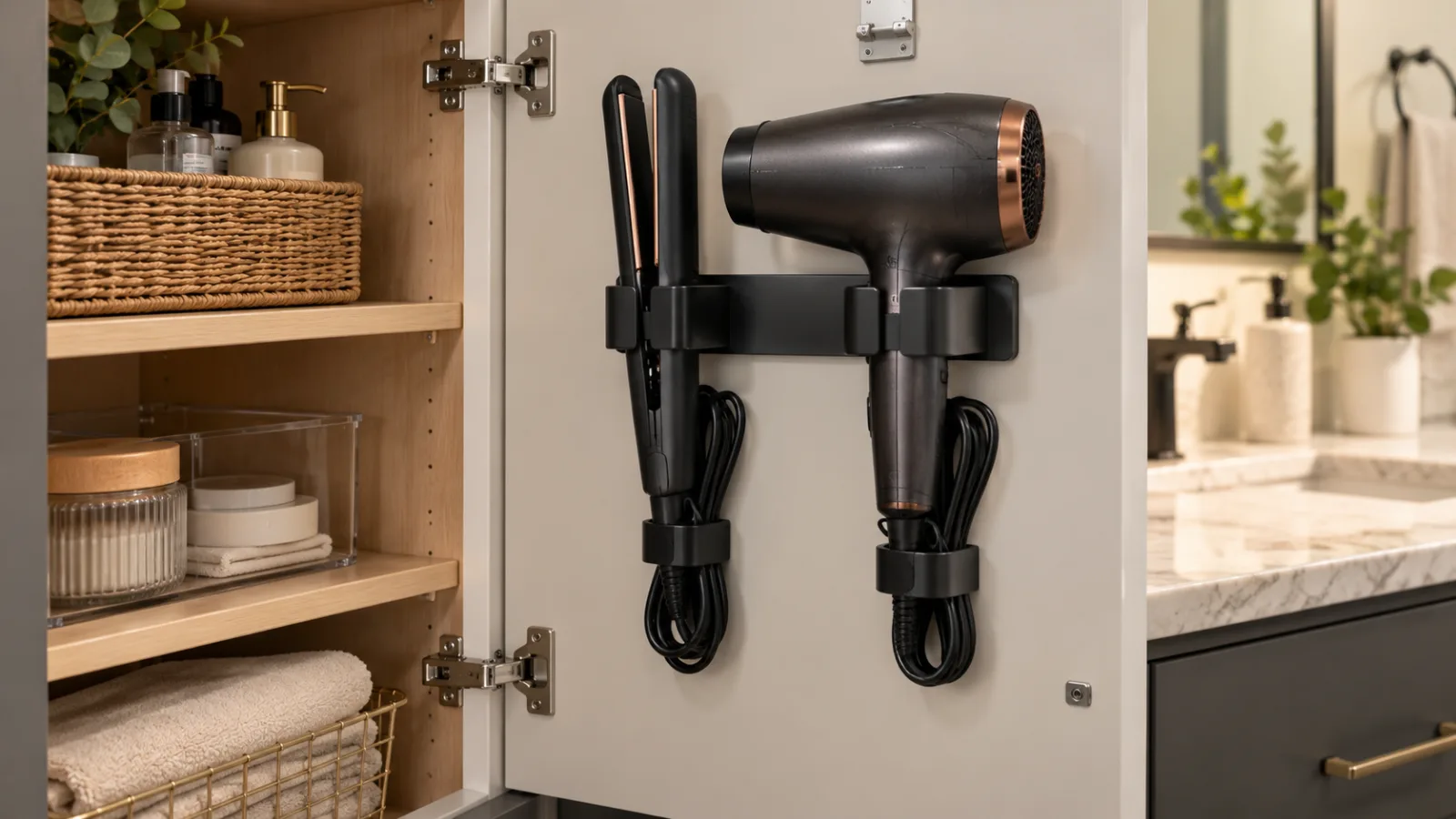
Heat and cords: what not to do
Never wrap or coil a cord while the tool is hot. Heat can weaken the wire and its insulation, and coiling a hot cord adds stress right when it is most vulnerable. Let the tool cool for 20 to 30 minutes first, then wrap the cord. Also keep cords away from the hot barrel itself, since a cord resting against a hot iron can melt its coating.
Water safety near outlets
Keep cords, plugs, and outlets away from the sink and any standing water. Unplug a tool before you wipe the counter near an outlet. Do not let a cord dangle where it could fall into a wet sink. If your outlet is near water, make sure it is the ground fault type that cuts power in a fault.
Comparison table
| Method | Stops tangles | Protects wire | Best for |
|---|---|---|---|
| Hook-and-loop tie | Yes | Yes, if loose | Bundling each cord |
| Cord hook | Yes | Yes | Hanging off the surface |
| Wide loop wrap | Yes | Yes | Healthy wire |
| Slotted organizer | Yes | Yes | Keeping tools apart |
For authoritative background, see this reference on hair styling tools.
That covers the essentials of hair tool cord management. Browse the related guides below for more, or explore the Canis Lycaon collection.
More on Hair Tool Cord Management
- How To Organize Hair Tools
- Are Hair Tool Organizers Heat Resistant
- Dyson Airwrap Holder What Fits
- Wooden Bathroom Hair Tool Organizer
Frequently asked questions
How do you keep hair tool cords from tangling?
Give each tool its own hook or slot, secure its cord with a reusable hook and loop tie, and wrap the cord in a loose, wide loop. This keeps each cord with its tool instead of wrapping around the others.
How do you wrap a curling iron cord?
Wrap it in a loose, wide loop that follows the cord’s natural curve, then secure it with a reusable tie. Do not wrap it tight around the handle, which kinks the wire. Wrap only once the tool is fully cool.
Can you coil a hot cord?
No. Heat can weaken the wire and its insulation, and coiling a hot cord adds stress when it is most vulnerable. Let the tool cool for 20 to 30 minutes first, then wrap the cord in a loose loop.
How do you store hair dryer cords?
Wrap the cord in a loose, wide loop and secure it with a tie, then hang it on a hook or store it in a slot with the dryer. Avoid tight coiling, which frays the wire.
How do you keep cords safe near water?
Keep cords, plugs, and outlets away from the sink and standing water, and unplug tools before wiping near an outlet. Do not let a cord dangle where it could fall into a wet sink. A ground fault outlet adds protection.