
Are Stainless Steel Containers Really Leak-Proof?
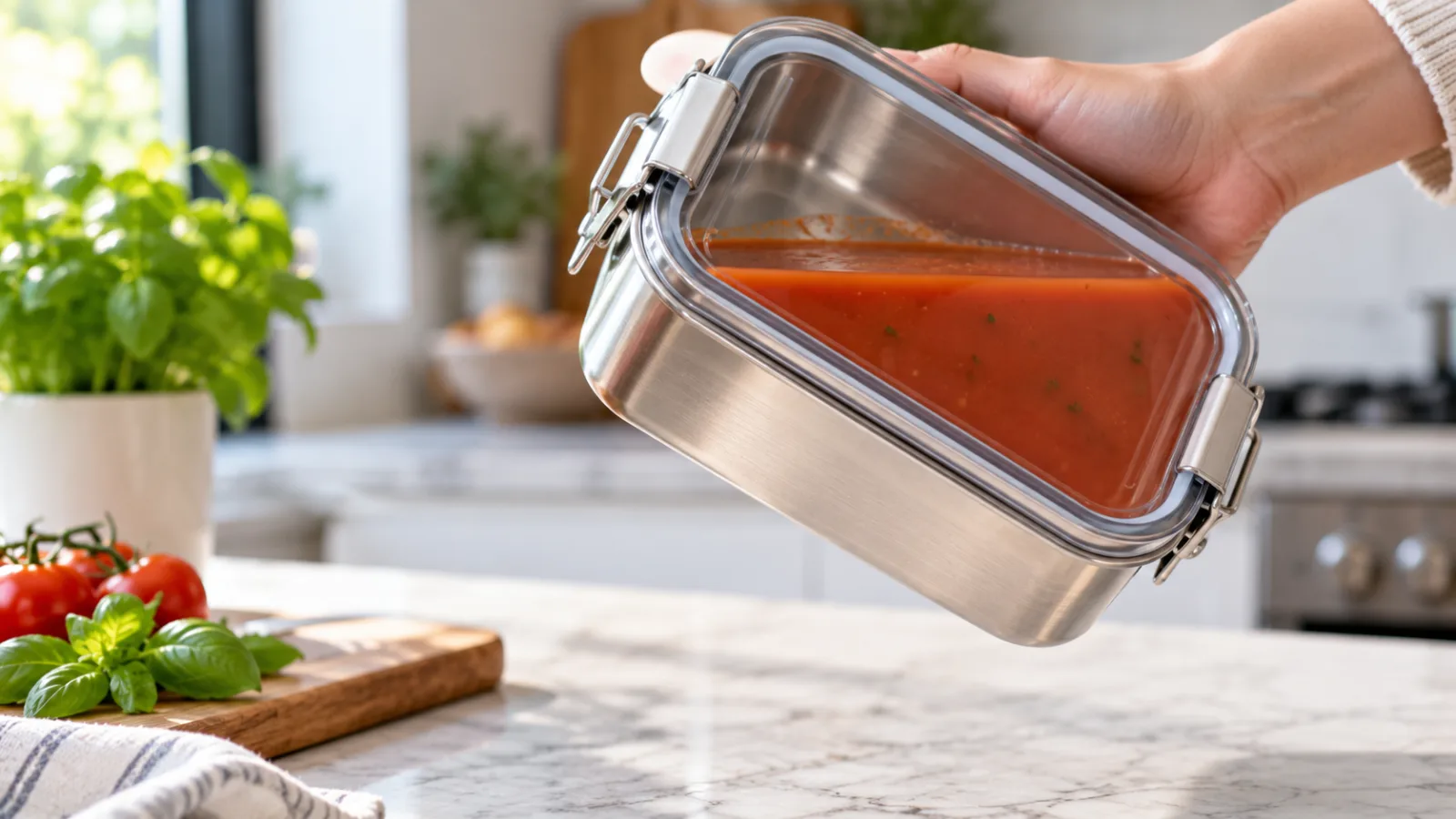
When it comes to leak-resistant stainless steel containers, the right choice depends on a few key details. You want to pack soup for lunch, but a leaky container in a bag is a disaster. Steel containers are marketed as spill-proof, yet some still drip. The truth is that only certain designs truly hold liquids.
Leak Proof Stainless Steel Containers: Some stainless steel containers are genuinely watertight, but only those with a silicone gasket and a clamp or locking lid that presses the seal tight. Plain press on lids are airtight at best and can leak with liquids. To test a container, fill it with water, close it, and shake it over the sink. A worn or missing gasket is the usual reason a once spill-resistant container starts to drip.
Below is the difference between airtight and leak-resistant, how a real seal works, and how to test one yourself.
Leak-proof vs airtight: the difference
Airtight means the lid keeps air out, which helps food stay fresh. It does not mean the container can hold liquid on its side or upside down. Leak proof means the container holds liquid even when tipped or shaken. A container can be airtight without being spill-proof. For soup in a bag, you need watertight, not just airtight.
How a real spill-resistant seal works
The first is a silicone gasket, a soft ring set into the lid that presses against the rim to close the gap. The second is a clamp or locking mechanism, which pushes the lid down hard so the gasket seals tight. Together they hold liquid even when the container tips. A lid that just presses or screws on lightly, with no gasket or clamp, cannot do this.
Which lids leak and which hold
A clamp lid with a gasket holds liquids well, since the clamps press the seal firmly. A screw lid with a gasket holds most liquids, though not always as tightly as a clamp. A plain press on lid is airtight at best and leaks with liquid. A clip lid varies, so check for a gasket. For soup and dressing, choose a clamp lid with a gasket.
How to test a container yourself
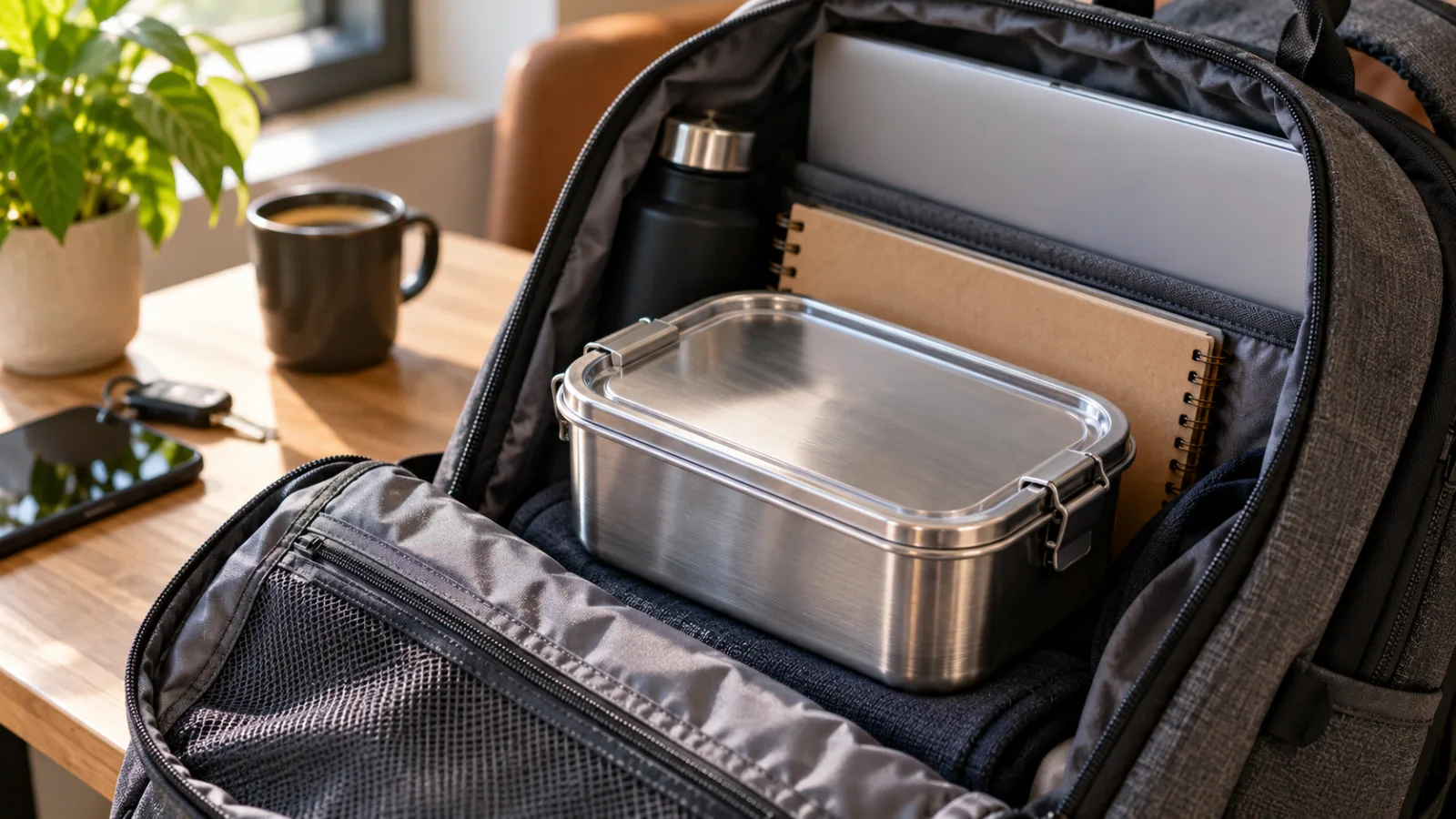
Fill the container about halfway with water, close the lid fully, and hold it over the sink. Turn it on its side, then upside down, and give it a gentle shake. A truly leak-resistant container stays dry outside. If water seeps out, the seal is not tight, and you should use that container for dry foods only.
Keeping the seal spill-proof over time
The gasket is the part that wears. Remove it now and then to clean underneath, since trapped food can stop it sealing. Check it is seated correctly after washing. Replace the gasket if it cracks, flattens, or loses its spring, since a worn gasket is the usual reason a container starts to drip.
Comparison table
| Lid type | Airtight | Leak-proof for liquids | Best for |
|---|---|---|---|
| Clamp with gasket | Yes | Yes | Soups, dressings |
| Screw with gasket | Yes | Mostly | Most liquids |
| Press-on | Yes | No | Dry foods |
| Clip lid | Varies | Only with a gasket | Check before use |
For authoritative background, see this reference on stainless steel.
That covers the essentials of watertight stainless steel containers. Browse the related guides below for more, or explore the Canis Lycaon collection.
More on Leak Proof Stainless Steel Containers
- Plastic Free Food Storage Steel Containers
- Stainless Steel Better Than Plastic
- Stainless Steel Lunch Containers Adults
- Stainless Steel Snack Containers with Silicone Lids
Frequently asked questions
Are stainless steel containers spill-resistant?
Some are, but only those with a silicone gasket and a clamp or locking lid that presses the seal tight. Plain press on lids are airtight at best and leak with liquids. For soup or dressing in a bag, choose a container with a clamp lid and a gasket, and test it first.
What is the difference between airtight and leak-proof?
Airtight means the lid keeps air out to keep food fresh, but it may still leak liquid when tipped. Leak proof means the container holds liquid even when tipped or shaken. A container can be airtight without being leak proof.
Can you carry soup in a steel container?
Yes, if the container is truly leak proof, with a silicone gasket and a clamp lid. Test it first by filling it with water and shaking it over the sink. A plain press on lid is not enough for soup.
How do you test for leaks?
Fill the container about halfway with water, close the lid fully, and hold it over the sink. Turn it on its side and upside down, then shake gently. If it stays dry outside, it is leak proof. If water seeps out, use it for dry foods only.
Why did my container start leaking?
Usually the gasket wore out. The silicone ring that seals the lid can crack, flatten, or lose its spring over time, or trapped food can stop it sealing. Clean under the gasket, make sure it is seated right, and replace it if it is worn.