
Is Stainless Steel Better Than Plastic for Food Storage?

When it comes to stainless steel better than plastic, the right choice depends on a few key details. You are eyeing your scratched, stained plastic tubs and wondering if steel is worth the switch. For most uses it is, though there is one job where plastic still holds on.
Stainless Steel Better Than Plastic: For most uses, stainless steel is better than plastic for food storage because it has no BPA, does not stain or hold odors, lasts far longer, and will not leach chemicals when heated near food. The trade off is that steel cannot go in the microwave and costs more upfront. Over time, a steel container often works out cheaper because you replace it far less often than plastic.
Below is the case against plastic, where steel wins, the one place plastic still wins, and the real cost over time.
The case against plastic
First is chemicals. Older plastic used BPA, and while the U.S. Food and Drug Administration says BPA is safe at low levels, many people still choose to avoid it. Plastic can leach more when scratched, old, or heated. Second is wear. Plastic stains from tomato and turmeric, warps in the dishwasher, and scratches. Third is waste. Cheap plastic breaks and gets tossed, then bought again.
Where steel wins
On safety, steel has no BPA and nothing to leach from the material itself. On staining and odor, steel wipes clean and smells fresh. On durability, steel survives drops and years of use without warping or cracking. On heat, steel does not release chemicals near hot food the way some plastics can.
The one place plastic still wins
The big one is the microwave. Many plastic containers can be microwaved, while steel cannot. The smaller wins are price and weight. Plastic is cheaper to buy and lighter to carry. For a tight budget today or a light lunch, plastic still has a place.
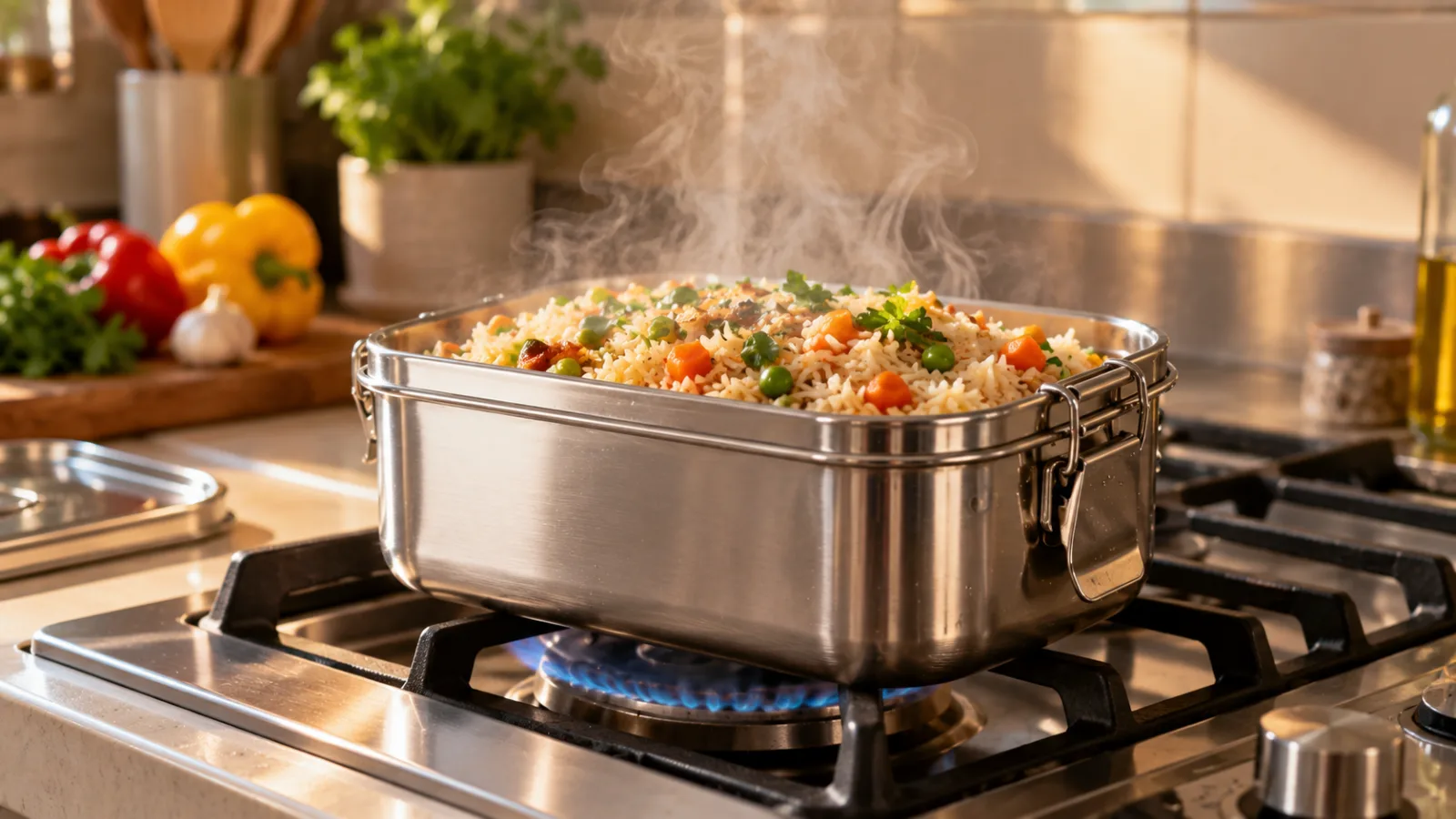
Cost over time: steel vs replacing plastic
Plastic is cheap to buy, but it breaks, stains, and warps, so you replace it again and again. Steel costs more upfront and lasts for years, often outliving many rounds of plastic. Add up several plastic replacements over a few years, and steel often comes out cheaper in the long run.
Who should switch first
Switch first for foods you store often, like lunches and meal prep, where steel’s durability and safety pay off daily. Switch for kids’ containers, since steel will not shatter and holds no smells. Keep a few glass pieces for reheating.
Comparison table
| Factor | Stainless steel | Plastic | Winner |
|---|---|---|---|
| Safety | No BPA, no leaching | Can leach | Steel |
| Durability | Very high | Warps, cracks | Steel |
| Odor and stains | None | Stains, holds smell | Steel |
| Microwave | No | Often yes | Plastic |
| Upfront cost | Higher | Lower | Plastic |
| Long-term cost | Lower, lasts | Higher, replaced | Steel |
| Eco | Recyclable, lasts | More waste | Steel |
That covers the essentials of stainless steel better than plastic. Browse the related guides below for more, or explore the Canis Lycaon collection.
More on Stainless Steel Better Than Plastic
- Plastic Free Food Storage Steel Containers
- 18 8 Vs 18 10 Vs 304 Vs 316 Stainless Steel
- Are Silicone Lids Safe
- Stainless Steel Snack Containers with Silicone Lids
Frequently asked questions
Is stainless steel better than plastic for food?
For most uses, yes. Steel has no BPA, does not stain or hold odor, lasts far longer, and will not leach chemicals near hot food. The trade off is that it cannot be microwaved and costs more upfront. Plastic still wins on microwave use, price, and weight.
Is steel healthier than plastic?
Steel has no BPA or plastic softeners, so there is nothing to leach from the material itself, while some plastics can leach more when scratched, old, or heated. For people who want to avoid these chemicals, steel is the healthier choice.
Does steel last longer than plastic?
Yes, by a wide margin. Steel survives drops and years of use without warping, cracking, or staining, while plastic wears out and gets replaced. A single steel container often outlasts many rounds of plastic.
Can steel replace all plastic containers?
Almost, but keep a few glass pieces for reheating, since steel cannot go in the microwave. Steel covers storage, lunches, meal prep, and freezing, while glass handles microwave reheating.
Is steel worth the higher price?
Usually yes. Steel costs more upfront but lasts for years, so it often works out cheaper than buying plastic again and again. It is also safer and cleaner.