
Stainless Steel vs Plastic vs Glass Food Containers: Full Comparison
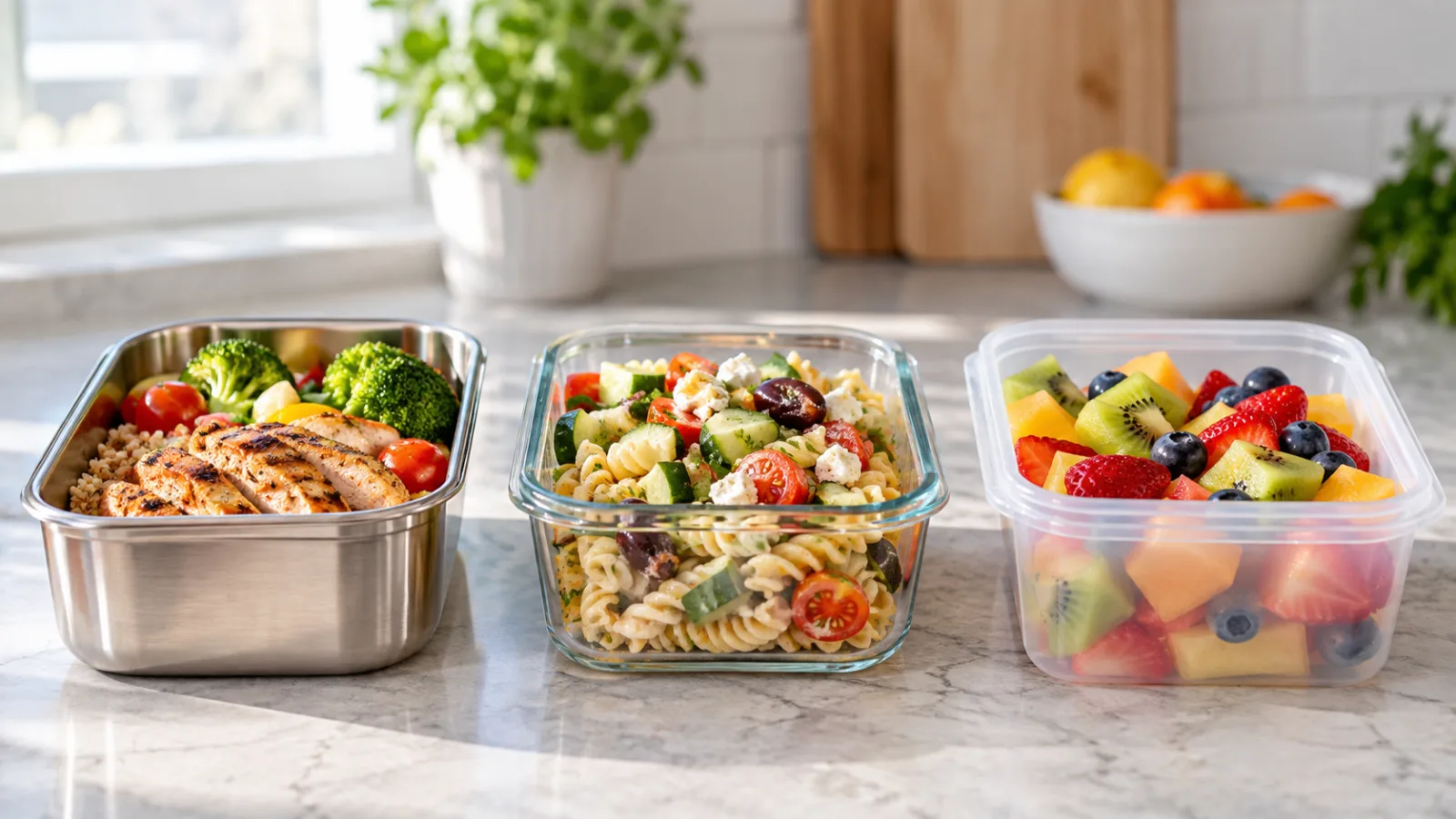
When it comes to steel vs plastic vs glass, the right choice depends on a few key details. Every food container is one of three materials. Steel, glass, or plastic. Each one wins in some ways and loses in others, so the right pick depends on how you eat, not on which is best overall.
Steel vs Plastic vs Glass: Stainless steel is the most durable and travel safe and has no BPA, but it cannot go in the microwave and you cannot see inside. Glass is microwave and oven safe and lets you see the food, but it is heavy and can shatter. Plastic is light and cheap but can stain, warp, and leach chemicals. For lunches and meal prep on the go, steel wins. For reheating at home, glass wins.
The steel vs plastic vs glass question comes down to how you eat, and below each factor gets a head to head look.
Steel vs plastic vs glass at a glance
Steel is metal that lasts for years and travels well. Glass is clear and heat friendly but heavy. Plastic is cheap and light but wears out. Most kitchens end up with a mix, and that is the smart move. You need the right one for each job.
Steel vs plastic vs glass on safety and BPA
Steel and glass contain no BPA and do not leach chemicals into food under normal use. Steel can release trace amounts of metal only when very acidic food sits in it for a long time, which mainly matters for people with a nickel allergy. Glass is inert and reacts with nothing.
Plastic is the weak link. Older plastics used BPA, and while the U.S. Food and Drug Administration says BPA is safe at the low levels found in packaging, many shoppers still avoid it. Plastic can also leach more when it is scratched, old, or heated.
Microwave and oven use
You cannot microwave stainless steel, since metal blocks the waves and can spark. Glass goes straight from fridge to microwave to oven. Plastic can be microwaved only if it is labeled microwave safe. The steel workaround is simple. Move food onto a plate or into a glass dish before you microwave it.
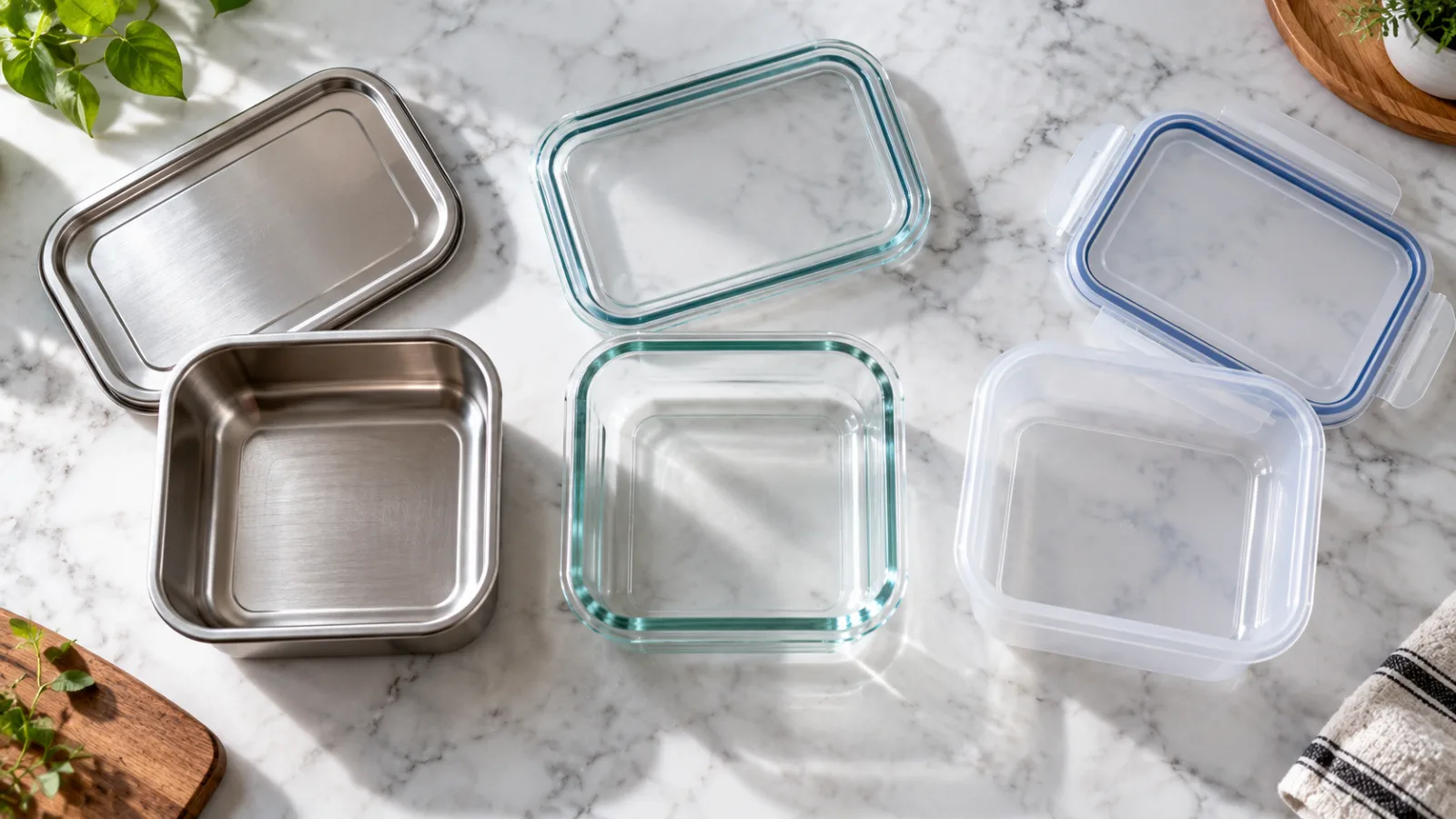
Steel vs plastic vs glass on durability and weight
Steel will not crack, shatter, or stain, and it survives being dropped. Glass is sturdy but breakable. Plastic does not shatter, but it warps, stains, and scratches. Weight matters for a commute. Steel is light. Glass is heavy. Plastic is the lightest, but you trade that for a shorter life.
Leak-proofing and everyday use
All three can be leak proof, but only with the right lid. A leak proof container needs a silicone gasket and a clamp or locking lid. For soup or dressing in a bag, choose a steel or glass container with a gasket lid and a clamp. Steel is the most bag friendly.
Price and sustainability
Plastic is the cheapest to buy and the most expensive to keep replacing. Steel and glass cost more upfront and last for years, so the long run cost is often lower. Both are also more sustainable.
Which to choose for your routine
For a work lunch you carry in a bag, choose steel. For meal prep you reheat at the office, glass is easier. For kids, steel wins, since it will not shatter. For a tight budget today, plastic works, but plan to replace it. That is the steel vs plastic vs glass verdict in short.
Comparison table
| Factor | Stainless steel | Glass | Plastic |
|---|---|---|---|
| Safety, BPA | No BPA, safe | No BPA, inert | Can leach, varies |
| Microwave | No | Yes | Only if labeled |
| Durability | Very high | Breakable | Warps, stains |
| Weight | Light | Heavy | Lightest |
| Leak proof option | Yes, gasket lid | Yes, gasket lid | Yes, gasket lid |
| Price over time | Low, lasts | Low, lasts | High, replaced often |
| Best for | Lunch, travel, kids | Reheating at home | Short term, budget |
That covers the essentials of steel vs plastic vs glass. Browse the related guides below for more, or explore the Canis Lycaon collection.
More on Steel vs Plastic vs Glass
- Plastic Free Food Storage Steel Containers
- Stainless Steel Lunch Containers Adults
- Stainless Steel Better Than Plastic
- Stainless Steel Snack Containers with Silicone Lids
Frequently asked questions
Is steel vs plastic vs glass an easy choice?
It depends on the job. Steel is best for lunches, travel, and kids, since it is light, tough, and has no BPA. Glass is best for reheating at home. Plastic is cheapest but wears out. Most kitchens use steel and glass together.
Which food container material is safest?
Stainless steel and glass are the safest choices. Both have no BPA and do not leach under normal use. Glass is fully inert, and food grade steel only releases trace metal when very acidic food sits in it for a long time.
Can you microwave stainless steel or glass?
You can microwave glass but not stainless steel. Metal blocks microwaves and can spark. To reheat food stored in steel, move it to a plate or a glass dish first.
Which is best for meal prep?
Glass is best if you reheat meals in the container. Steel is best if you store and freeze meals and reheat on a plate. Many meal preppers keep both.
Which lasts the longest?
Stainless steel lasts the longest. It will not crack, shatter, or stain. Glass lasts too but can shatter, and plastic has the shortest life.