
What Is Food-Grade Stainless Steel? (And How to Check)
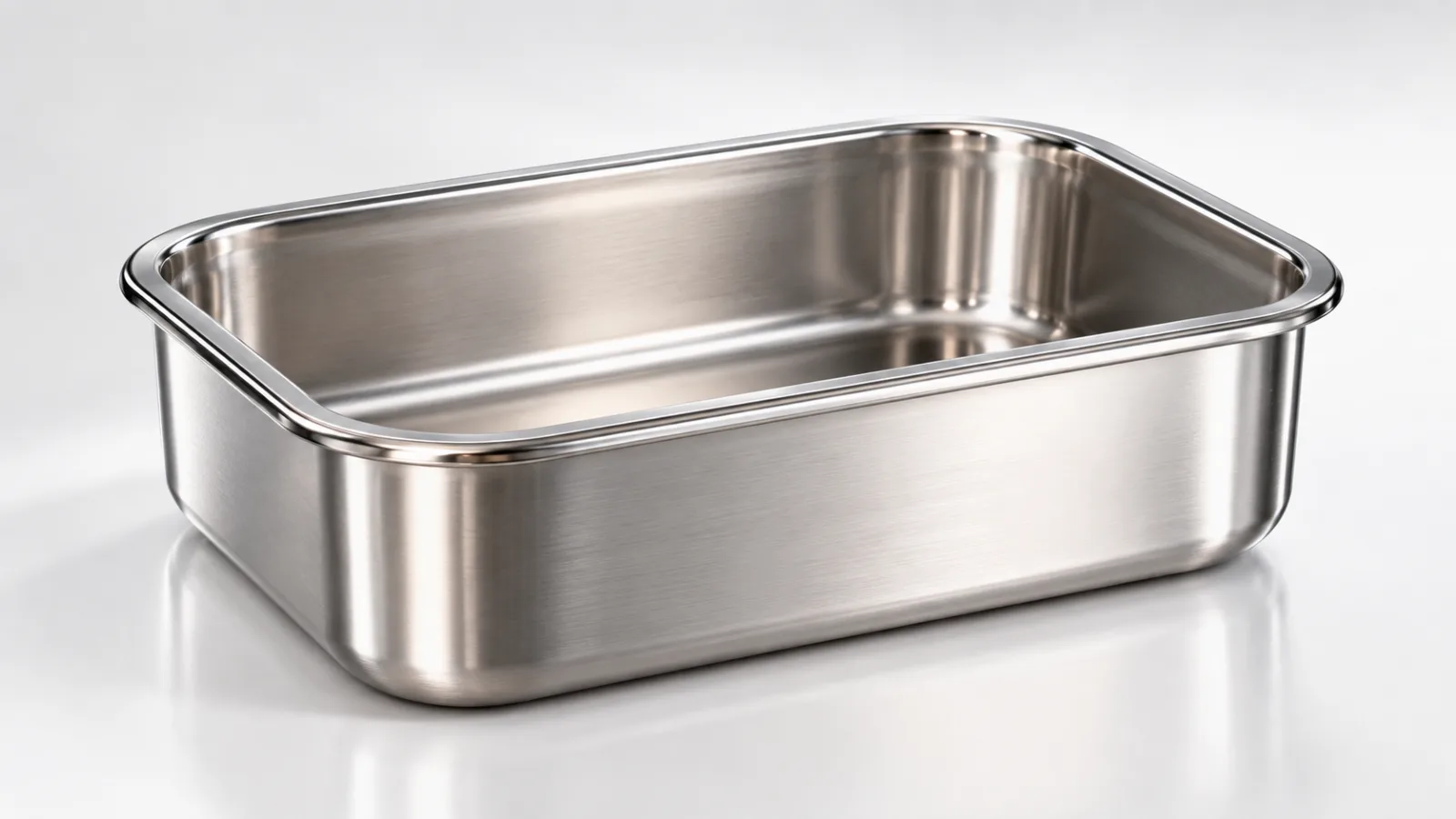
When it comes to food grade stainless steel, the right choice depends on a few key details. The phrase food grade sounds official, but it is easy to slap on a label. So what does it really mean, and does every steel container qualify? Knowing the answer helps you avoid cheap steel that is not what it claims.
Food Grade Stainless Steel: Food grade stainless steel is steel safe for contact with food, usually grade 304 (18/8) or 316, with enough chromium to form a stable, non reactive surface. Not all this material is food grade, since lower grades can corrode and react. To check, look for a stated grade like 304 or 316, buy from brands that label their material, and be wary of unmarked, very cheap containers that list no grade at all.
Below is what food grade means, which grades qualify, and how to check before you buy.
What food-grade means
Food grade means the steel is safe to touch food without reacting or passing on harmful substances.
The key is a non reactive surface. Steel earns that through enough chromium, which forms a stable layer that resists corrosion and keeps the metal from leaching. Food grade steel does not rust easily, does not add a metal taste, and holds up to washing and daily use. It is the standard for containers, bottles, and kitchen tools.
Is all the metal food grade? No
This is the point many shoppers miss. Not every the steel is food safe.
Stainless steel comes in many grades, made for many jobs, from construction to industry. Lower grades have less chromium or nickel and can corrode or react more. A very cheap container may use one of these grades to cut cost. So the word stainless alone does not guarantee food safety. The grade does.
The grades that qualify: 304 and 316
Two grades cover almost all food use.
Grade 304, also called 18/8, is the standard food grade steel. It has 18 percent chromium and 8 percent nickel, resists corrosion, and suits everyday food storage. Grade 316 adds molybdenum for extra resistance to salt and acids, which makes it a premium choice for very acidic or salty foods. Both are food safe. For a full comparison, see our guide on this material grades.

How to check before you buy
Three quick checks tell you if a container is truly food grade.
First, look for a stated grade, like 304, 18/8, or 316, on the product or its listing. A named grade is your best proof. Second, buy from brands that label their material clearly, since a brand that hides the grade may have something to hide. Third, be wary of unmarked, very cheap steel that lists no grade at all, since it may use a lower quality alloy. When in doubt, choose the container that states its grade.
Myths: the magnet test and others
You may have heard that a magnet tells you if steel is food grade. It does not.
Whether steel is magnetic depends on its structure, not its food safety. Grade 304 is mostly non magnetic, while some food safe grades are magnetic, so a magnet cannot sort food grade from the rest. The only reliable check is the stated grade. Ignore the magnet test and look for 304 or 316 on the label.
Comparison table
| Check | What to look for | Red flag |
|---|---|---|
| Stated grade | 304, 18/8, or 316 | No grade listed |
| Brand labeling | Clear material info | Hidden or vague |
| Price | Fair for solid steel | Suspiciously cheap |
| Finish | Smooth, even | Rough, thin, tinny |
For authoritative background, see this reference on the metal.
That covers the essentials of food grade stainless steel. Browse the related guides below for more, or explore the Canis Lycaon collection.
More on Food Grade Stainless Steel
- Plastic Free Food Storage Steel Containers
- Best Stainless Steel Meal Prep Containers
- Stainless Steel vs Plastic vs Glass Food Containers
- Stainless Steel Snack Containers with Silicone Lids
Frequently asked questions
What is food-grade stainless steel?
Food grade stainless steel is steel safe for contact with food, usually grade 304 (18/8) or 316. It has enough chromium to form a stable, non reactive surface that resists corrosion and does not leach into food. It is the standard for containers, bottles, and kitchen tools.
Is all the steel food safe?
No. Stainless steel comes in many grades made for many jobs, and lower grades can corrode or react more. A very cheap container may use one of these. The word stainless alone does not guarantee food safety. Look for a stated grade like 304 or 316.
How do you know if steel is food grade?
Look for a stated grade, like 304, 18/8, or 316, on the product or listing. Buy from brands that label their material clearly, and be wary of unmarked, very cheap steel that lists no grade. A named grade is your best proof that a container is food safe.
Does the magnet test show food-grade steel?
No. Whether steel is magnetic depends on its structure, not its food safety. Grade 304 is mostly non magnetic, while some food safe grades are magnetic, so a magnet cannot tell you if steel is food grade. Check the stated grade instead.
Is 304 stainless steel food grade?
Yes. Grade 304, also called 18/8, is the standard food grade stainless steel. It has 18 percent chromium and 8 percent nickel, resists corrosion, and is safe for everyday food storage. It is one of the most common food safe grades used in containers.